How to Warn Others That Your Dog May Bite (Without a Muzzle)
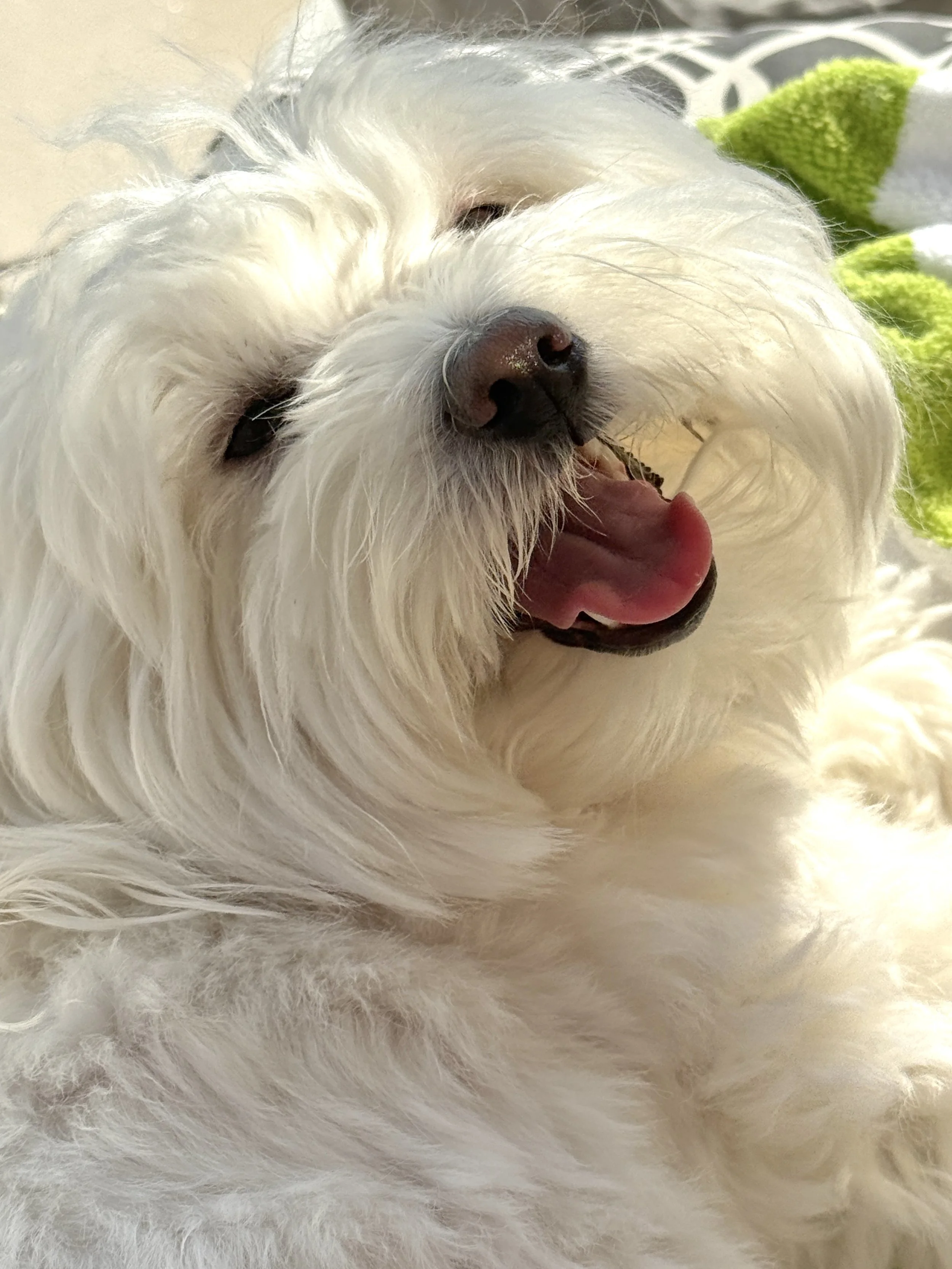
The pint-sized fluff - Skippy, Coton de Tulear
Not every dog who’s capable of biting is “aggressive.” Sometimes they’re just anxious. And as any dog parent knows, it’s our job to read the signs before they become a problem.
My dog Skippy is pint-sized, fluffy, and looks like he belongs in a storybook. People love to rush in with a smile and a hand outstretched. But here’s the truth: despite his sweet face, Skippy gets overwhelmed in certain situations—and if he’s startled or crowded, he might snap.
While a muzzle is the most visible and effective way to warn others (and may be absolutely necessary for some dogs), it’s not always the right fit for dogs like Skippy, who are usually calm but need space in certain moments.
So what else can you do?
3 Ways to Warn Others
1. Body Language: Use Yours and Read Theirs
You know your dog best. You can see when their anxiety starts to build—even before they show obvious signs. It’s up to you to create a safe bubble around your pup.
Try this:
Keep your leash short and secure—wrapped around your hand and with your dog walking right next to you, not ahead.
In crowds or around children, position your body between your dog and others.
Use hand cues or a firm “just a minute” to pause anyone rushing in to pet your pup.
If someone doesn’t slow down, step in physically. It’s okay to be direct. You’re advocating for your dog’s safety and theirs.

2. Clear, Visible Warnings Help—Even Without a Muzzle
Despite all of this, I still found myself struggling. Skippy looked so approachable that people just didn’t take the hint. I needed something obvious, especially in moments when I might be distracted and not able to intercept quickly.
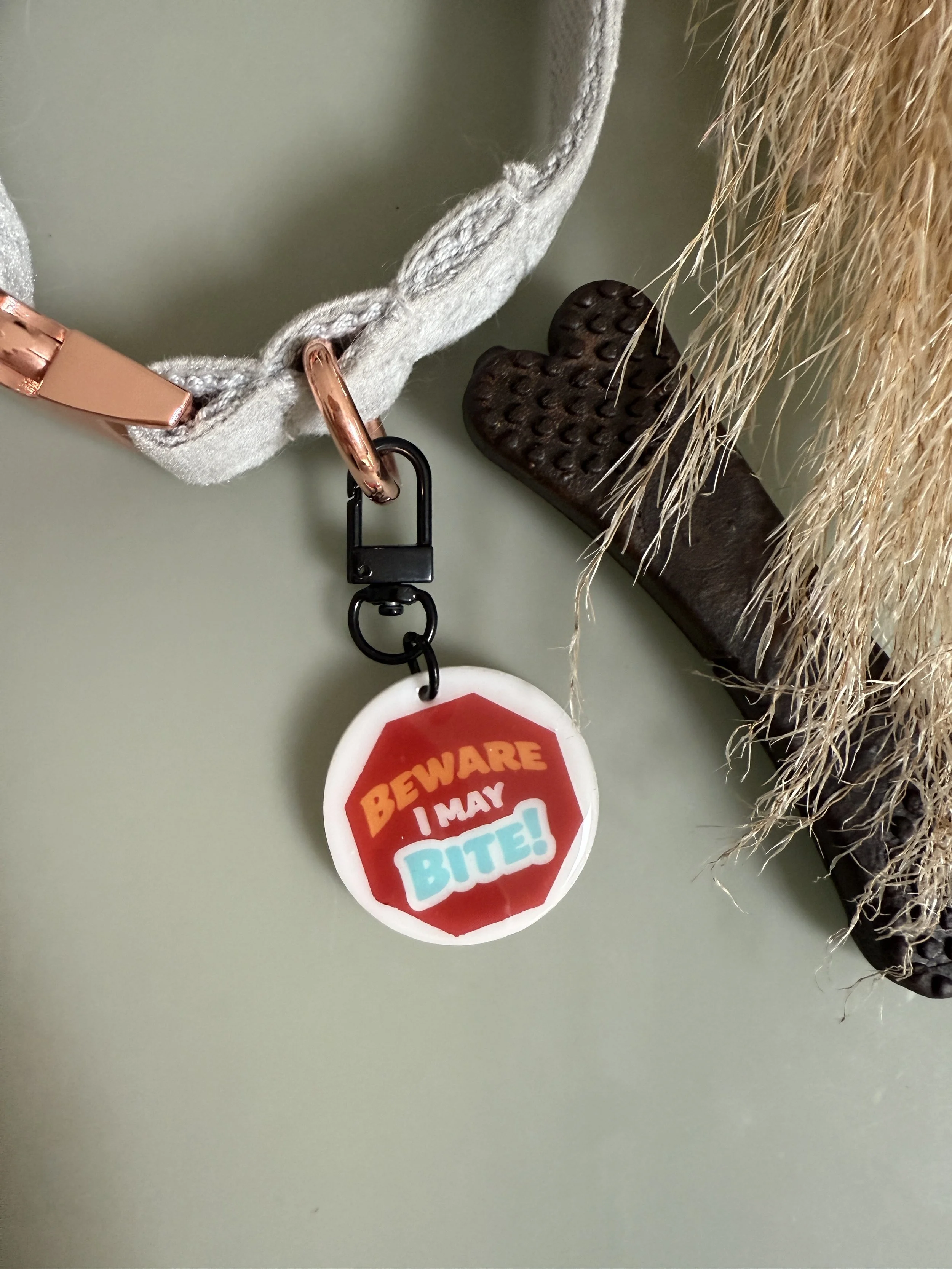
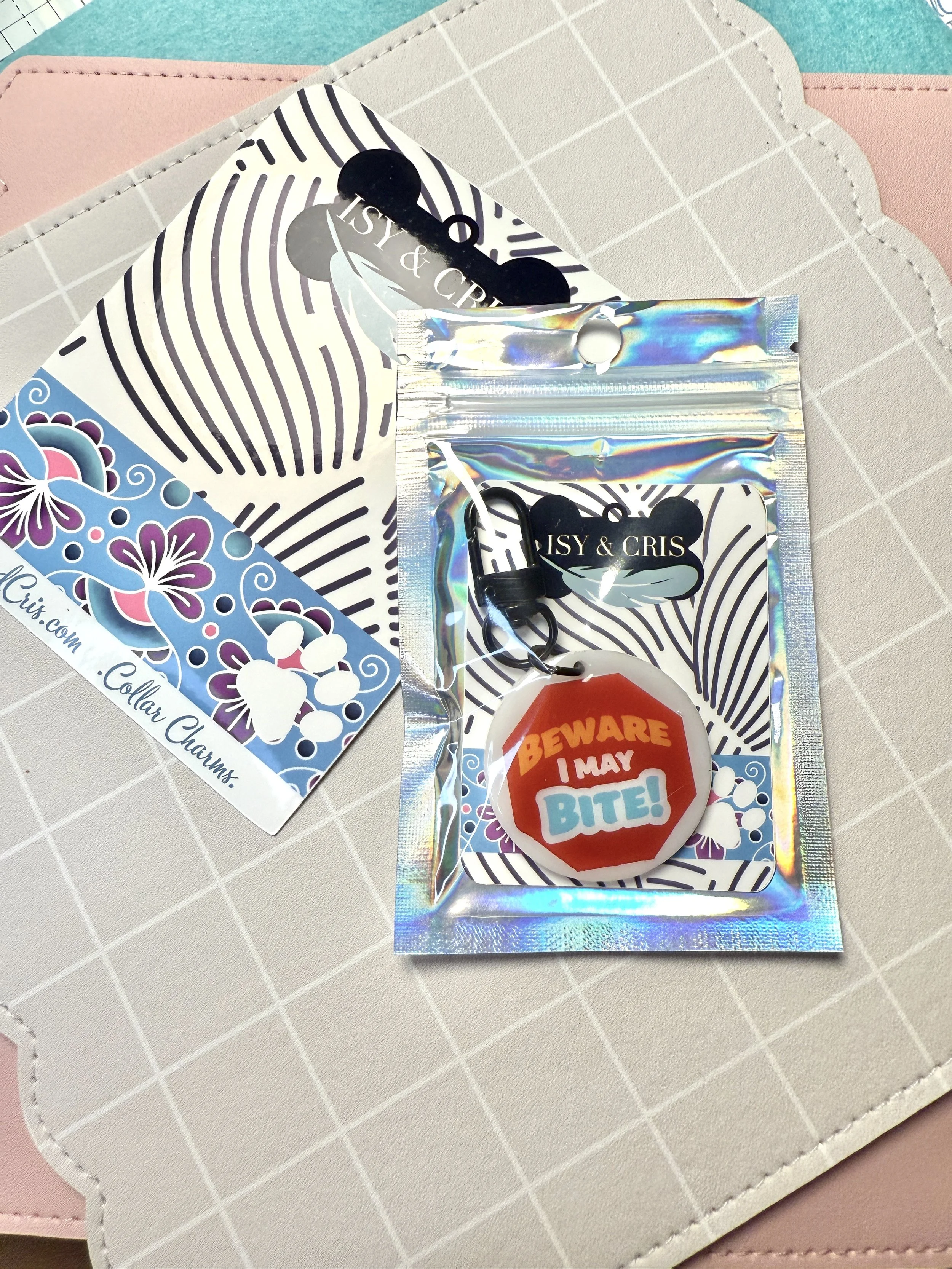
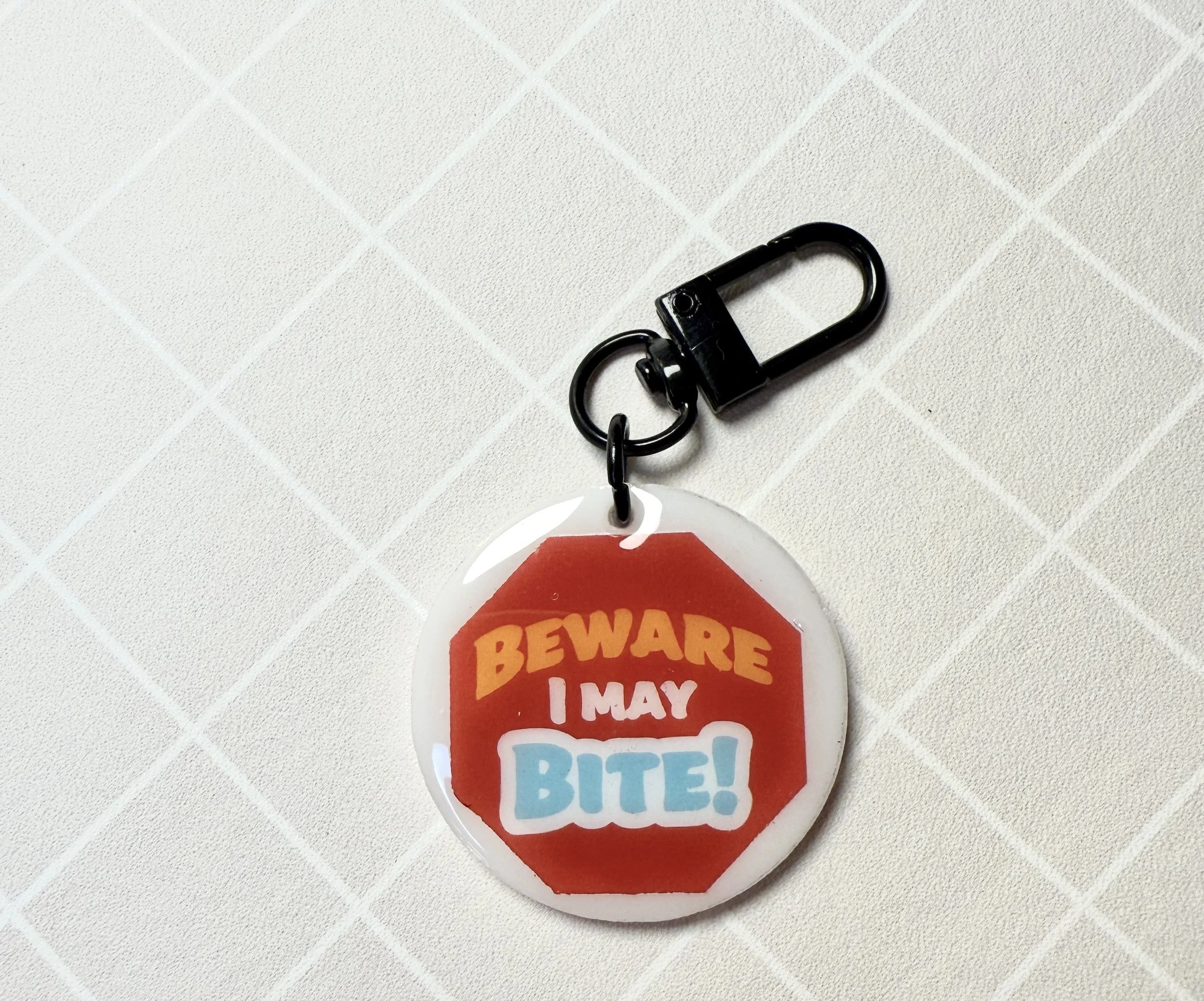
So I created a bright red collar charm that says:
“BEWARE – I May Bite!”
It’s shaped like a stop sign—a design kids and adults instantly recognize. It catches attention before anyone even reaches for him.
Since adding this charm, we’ve had fewer surprise interactions and way more respectful space. Even better? Fellow dog parents started asking me for one too—for dogs with similar anxiety or unpredictable triggers.
3. Know Your Dog’s Needs—and What’s “Enough”
The truth is, not every solution works for every dog. In Skippy’s case, these strategies and the collar charm have been enough—but for others, especially dogs with a bite history, a muzzle might still be necessary.
What matters most is:
You know your dog’s limits.
You take visible steps to protect others.
You create an environment where your dog can succeed—rather than be overwhelmed.
Other Helpful Ideas to Consider:
Color-coded gear: Some companies make leashes, harnesses, or bandanas in bold warning colors like red or yellow with printed messages (“Needs Space,” “Do Not Pet”).
Training cue words for people: Teach your dog a “focus” or “heel” cue and practice it often, especially in public.
Pet-friendly social scripts: Have a go-to phrase like, “He’s friendly from a distance, but please give him some space.”
Every dog deserves to feel safe—and so does everyone who meets them. Whether that means a simple collar charm, using your own body to create a barrier, or even a muzzle, the most important thing is taking proactive steps.
As their owner, you’re their voice and their advocate. Don’t be afraid to speak up, stand between, or say “not today.” Skippy and I have learned the hard way, but we’re now walking a little safer—and with a lot more peace of mind.